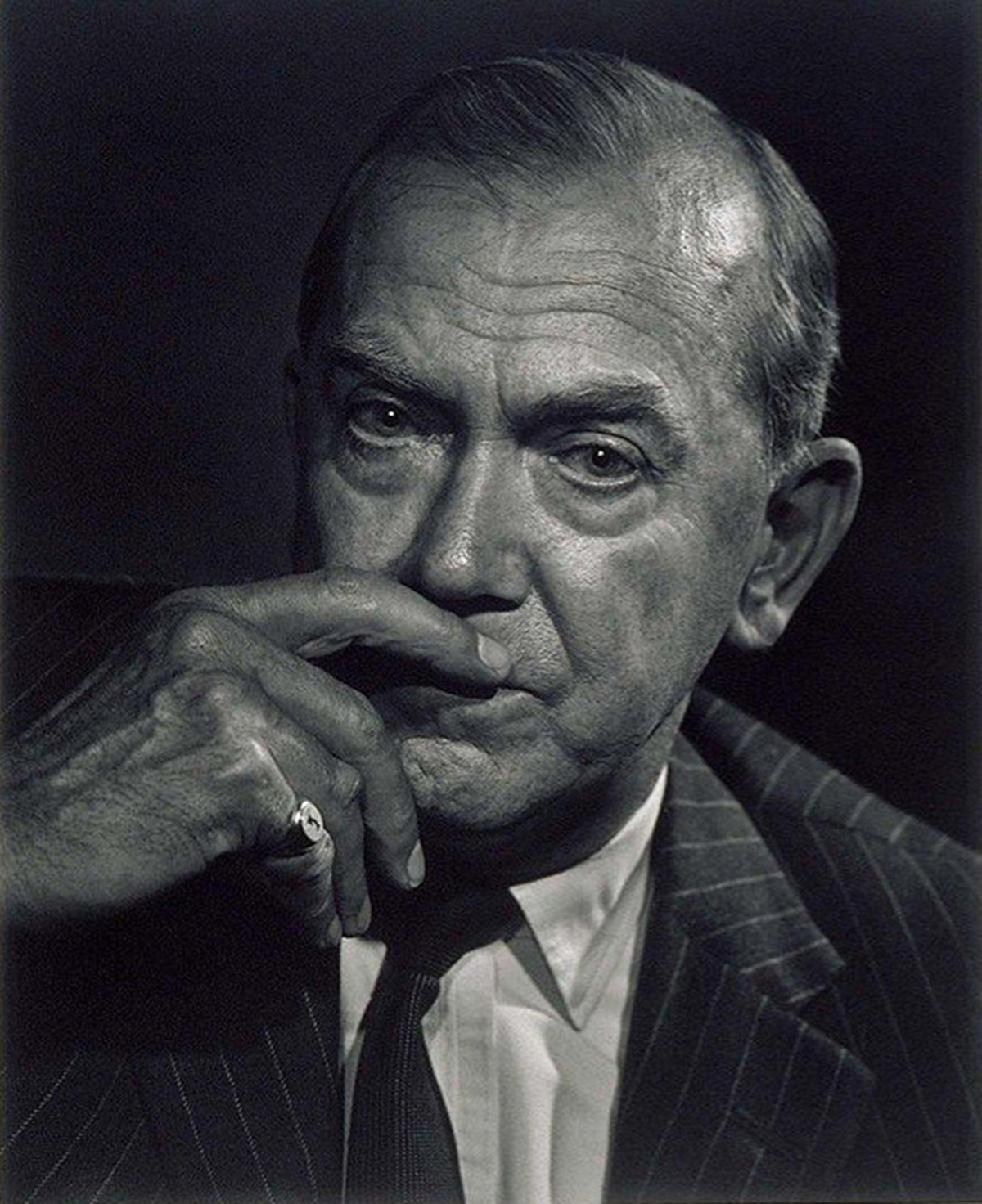
Henry Graham Greene (1904–1991) was one of the most significant English novelists of the twentieth century, renowned for his distinct exploration of moral and political ambiguities in the modern world. His multifaceted body of work spans psychological thrillers, deeply theological novels, travel writing, and screenplays, establishing a literary archetype often referred to as "Greeneland."
Early Life, Education, and Formative Influences
Graham Greene was born on October 2, 1904, in Berkhamsted, Hertfordshire, England. His father was the headmaster of Berkhamsted School, an environment that provided a strict, academic backdrop for Greene’s childhood, though one he frequently found stifling and anxiety-inducing. As a young student, Greene suffered from severe depression and boredom, leading him to undergo psychoanalysis in London during his teens—an experience that profoundly shaped his understanding of the human psyche, guilt, and the subconscious.
He later attended Balliol College, Oxford, where he published his first book, a collection of poetry titled Babbling April (1925), to modest reception. During his university years, Greene developed a rebellious streak, briefly joining the Communist Party and engaging in risky adventures, such as crossing into the Ruhr Valley during the French occupation. These early experiences with political volatility and espionage laid the groundwork for the geopolitical tension that would dominate his later fiction.
Following graduation, Greene worked as a journalist, first for the Nottingham Journal and subsequently as a sub-editor for The Times. It was during his stint at The Times that he published his first commercially successful novel, The Man Within (1929). The book's reception allowed him to leave journalism and pursue a full-time career as an author, marking the formal beginning of a prolific literary journey.
Categorization of Major Works: "Entertainments" vs. "Novels"
Greene famously divided his fiction into two distinct categories: "novels" and "entertainments." While this distinction was partly a commercial and defensive strategy to shield his more serious theological works from harsh critical reviews, it highlights the dual nature of his output.
The Entertainments
The entertainments were fast-paced, plot-driven thrillers that frequently featured elements of suspense, pursuit, and espionage. Despite their genre trappings, these works often explored profound moral decay and social corruption. Key titles in this category include:
- Stamboul Train (1932): Often considered his breakthrough suspense novel, set aboard the Orient Express and introducing a cast of politically and morally compromised characters.
- A Gun for Sale (1936): Features Raven, a hunted, harelipped assassin, blending noir aesthetics with deep psychological sympathy for an outcast.
- The Confidential Agent (1939): A tense thriller reflecting the anxieties of the Spanish Civil War and pre-World War II Europe.
- The Third Man (1949): Originally written as a novella treatment for the classic Carol Reed film noir, exploring post-war corruption in divided Vienna.
The Serious Novels
Greene’s serious novels prioritized deep moral and theological quandaries, frequently centering on characters wrestling with sin, grace, redemption, and the nature of Catholic faith (Greene converted to Roman Catholicism in 1926). These foundational works cemented his literary reputation:
- Brighton Rock (1938): A chilling exploration of Catholic morality, sin, and damnation through the lens of Pinkie Brown, a ruthless teenage gang leader in pre-war Brighton.
- The Power and the Glory (1940): Set during the anti-clerical purges in Mexico, this novel follows the "whisky priest"—an alcoholic, deeply flawed clergyman fleeing state authorities while administering sacraments to a persecuted populace.
- The Heart of the Matter (1948): Set in a wartime British colony in West Africa, examining the tragic descent of Scobie, a scrupulous police officer driven to despair and suicide by conflicting loyalties and spiritual obligations.
- The End of the Affair (1951): A searing, semi-autobiographical exploration of love, jealousy, and religious obsession in London during and after the Blitz.
Major Themes and the Concept of "Greeneland"
The term "Greeneland" was coined by critics to describe the distinct, seedy, and morally ambiguous settings that permeate Greene’s fiction. Whether located in the rainy, bombed-out streets of London, the humid slums of Port-au-Prince in The Comedians, or the impoverished backwaters of French Indochina in The Quiet American, Greeneland is characterized by decay, corruption, political oppression, and perpetual spiritual crisis.
Several recurring themes define this literary landscape:
1. Catholicism and the Problem of Grace
Greene’s Catholicism was unorthodox, rebellious, and deeply focused on the mercy of God rather than rigid moralism. His characters are frequently sinners caught in extremis, whose very sins paradoxically open the door to divine grace. As a character famously observes at the end of The Power and the Glory, "It takes only one bad man to damn himself, but it takes every saint and hero to love a soul to heaven."
2. The Psychology of Betrayal and Loyalty
Espionage, betrayal, and double-crossing are central motifs in Greene’s work, reflecting his own brief wartime service with MI6 under Kim Philby in Sierra Leone. Betrayal is rarely just a political act for Greene; it is an emotional and spiritual rupture. In The Human Factor (1978), a British intelligence officer turns to the Soviet Union not out of ideological zeal, but out of personal gratitude and love for his family, exploring the heavy toll of institutional loyalty.
3. Pity and Responsibility
Pity is portrayed in Greene’s novels as a dangerous, near-demonic emotion that can drive characters to destruction more effectively than hatred. In The Heart of the Matter, Major Scobie’s overwhelming pity for those who depend on him—both his wife and his mistress—forces him into mortal sin and ultimate self-destruction, illustrating the perilous burden of human empathy.
Comparison of Major Novels
To understand the breadth of Greene's literary output, the following table compares four of his most celebrated serious novels by setting, primary conflict, and core theological theme.
| Title | Publication Year | Primary Setting | Core Conflict / Plot | Central Theme |
|---|---|---|---|---|
| Brighton Rock | 1938 | Brighton, England | A teenage gangster murders a rival and attempts to cover his tracks by marrying a naive waitress. | Sin, damnation, and the absolute division between Catholic right and wrong. |
| The Power and the Glory | 1940 | Tabasco, Mexico | A hunted, sinful priest evades revolutionary authorities while performing his religious duties. | Grace operating through human weakness; the paradox of the unworthy saint. |
| The Heart of the Matter | 1948 | West Africa (Freetown) | A colonial police officer is torn between his religious duty, his wife, and his lover. | The destructive power of human pity and the tragic weight of mortal sin. |
| The Quiet American | 1955 | Saigon, French Indochina | A world-weary British journalist observes an idealistic American operative sowing political chaos. | The dangers of naive political idealism and unintended consequences of intervention. |
Later Career, Non-Fiction, and Political Engagement
In the latter half of his career, Greene expanded his geographic and political horizons. He traveled extensively to global conflict zones, serving as an astute observer of post-colonial upheavals and totalitarian regimes. His experiences directly inspired novels such as Our Man in Havana (1958), a satirical take on British intelligence gathering in Batista's Cuba, and The Comedians (1966), which exposed the brutal regime of François "Papa Doc" Duvalier in Haiti.
Greene was also a prominent essayist, autobiographer, and literary critic. His autobiographical works—A Sort of Life (1971) and Ways of Escape (1980)—provide candid insights into his literary methods, his lifelong battles with clinical depression, and his unorthodox personal life. Furthermore, his extensive film criticism, published largely in The Spectator during the 1930s, remains a cornerstone of British cinematic commentary, marked by sharp wit and an uncompromising eye for artistic integrity.
Political controversies frequently marked his later decades. Greene was an outspoken critic of American foreign policy in Latin America and Southeast Asia, a friend of Fidel Castro, and an opponent of apartheid in South Africa. His willingness to engage with leftist leaders and critique Western imperialism often drew sharp criticism from conservative commentators, yet he consistently defended his independence as a writer standing apart from party lines.
Cinematic Adaptations and Legacy
Greene maintained a lifelong, complex relationship with the film industry. Beyond writing original screenplays like The Third Man—which won the Grand Prix at the 1949 Cannes Film Festival—many of his novels were successfully adapted into major motion pictures. Directors such as Carol Reed, John Huston, and Joseph L. Mankiewicz brought his suspenseful narratives and moral dilemmas to the screen.
Prominent cinematic adaptations include:
- Brighton Rock (1947, directed by John Boulting, featuring Richard Attenborough as Pinkie).
- The Fallen Idol (1948, directed by Carol Reed, adapted from Greene's short story "The Basement Room").
- The Third Man (1949, directed by Carol Reed).
- The Quiet American (1958, directed by Joseph L. Mankiewicz; remade in 2002 by Phillip Noyce, starring Michael Caine).
- The End of the Affair (1999, directed by Neil Jordan, starring Ralph Fiennes and Julianne Moore).
Graham Greene passed away on April 3, 1991, in Vevey, Switzerland. He left behind a towering literary legacy that bridged the gap between popular genre fiction and high art. By examining the darkest corners of human nature with compassion, psychological depth, and theological curiosity, Greene secured his place as one of the definitive chroniclers of the turbulent twentieth century.
Frequently Asked Questions
What is "Greeneland"?
"Greeneland" is a critical term used to describe the distinct atmosphere of moral decay, political corruption, physical squalor, and spiritual crisis found in many of Graham Greene's novels. It reflects settings marked by poverty, violence, and institutional failure, mirroring the internal anxieties of his characters.
Why did Graham Greene divide his books into "novels" and "entertainments"?
Greene categorized his works to manage critical expectations. The "entertainments" were fast-paced thrillers focused on plot and suspense, while the "novels" delved into deeper theological and moral questions. This distinction helped protect his serious literary works from being judged merely as genre pulp, though many entertainments possess profound thematic weight.
Was Graham Greene a practicing Catholic?
Yes, Greene converted to Roman Catholicism in 1926, largely influenced by his future wife, Vivien Dayrell-Reed, and his intellectual examination of Catholic theology. However, his relationship with the Church was often complex and controversial. Several of his books were criticized or censured by Catholic authorities for their unorthodox portrayals of sin, adultery, and flawed clergy.
What is Graham Greene's most famous book?
While critical opinion varies, The Power and the Glory (1940) and Brighton Rock (1938) are widely regarded as his finest literary achievements. Among the general reading public, The Third Man and The Quiet American remain exceptionally famous due to their widespread cinematic adaptations and enduring political relevance.
Did Graham Greene work as a spy?
Yes, Greene worked for the British Secret Intelligence Service (MI6) during World War II, stationed in Sierra Leone under the supervision of Kim Philby, who later turned out to be a high-ranking Soviet double agent. Greene's wartime intelligence experience deeply informed the realism, bureaucracy, and moral ambiguity of his later spy thrillers, such as Our Man in Havana and The Human Factor.