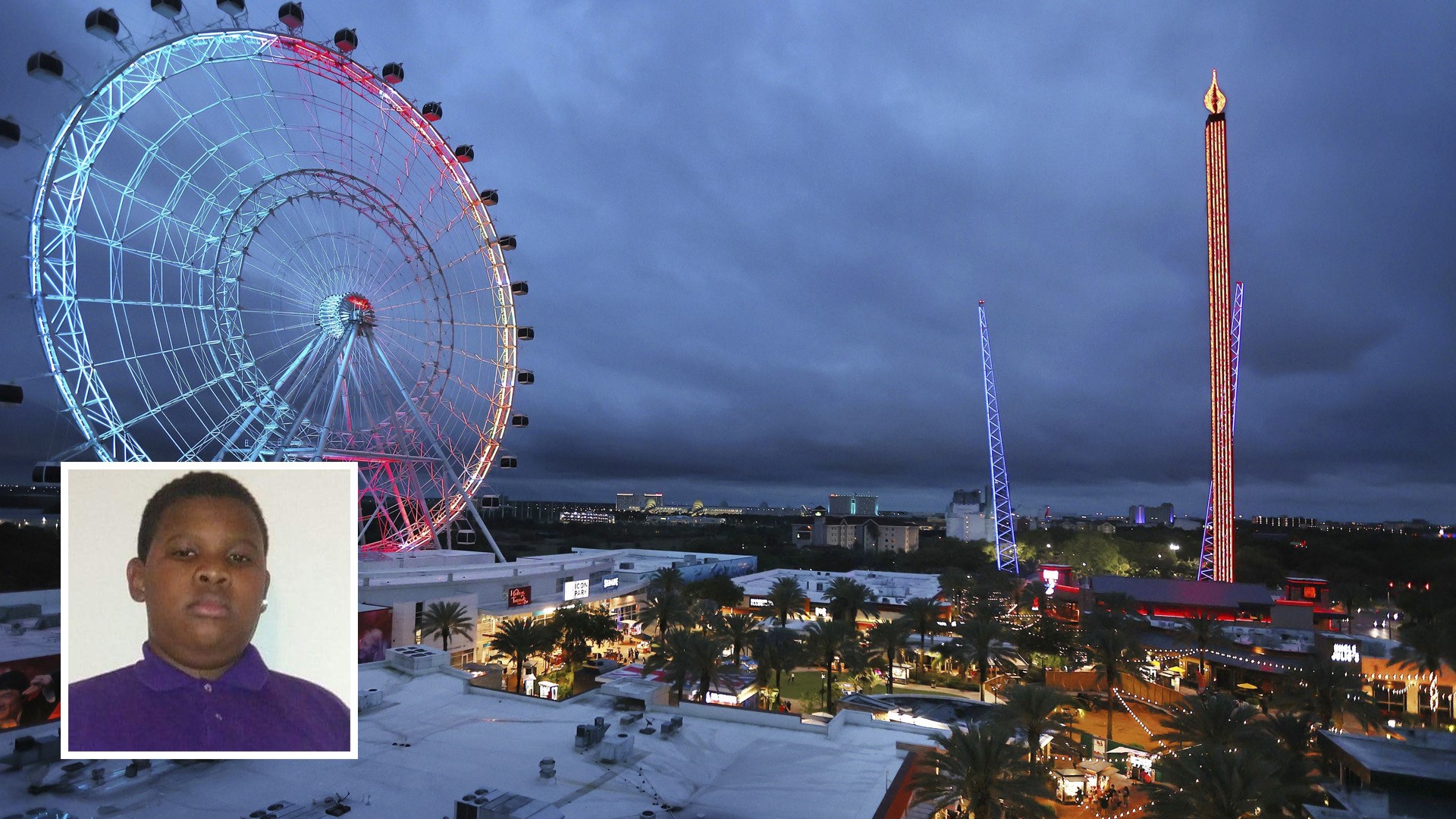
Tyre Sampson was a 14-year-old student-athlete who tragically lost his life on March 24, 2022, after falling from the Orlando FreeFall ride at ICON Park in Florida. His death sparked a national debate over amusement park safety, leading to the enactment of the Tyre Sampson Act and significant changes in how high-thrill attractions are inspected, operated, and regulated.
The tragedy of Tyre Sampson remains a pivotal moment in the history of the amusement park industry. As we look at the landscape of ride safety in 2026, the ripple effects of that night in Orlando continue to shape the standards that protect millions of park visitors every year. This article examines the technical failures that led to the accident, the legislative response that followed, and the ongoing efforts to ensure such a catastrophe never happens again.
The Orlando FreeFall Incident: A Timeline of Events
On the evening of March 24, 2022, Tyre Sampson, a resident of Missouri visiting Orlando with a football program, boarded the Orlando FreeFall. The ride, which opened in late 2021, was marketed as the world’s tallest free-standing drop tower, standing at 430 feet. Riders were hoisted to the top, tilted forward 30 degrees, and then dropped at speeds reaching 75 miles per hour.
Tyre, who stood over 6 feet tall and weighed approximately 380 pounds, was permitted to board the ride despite the manufacturer’s operations manual specifying a maximum weight limit of approximately 287 pounds (130 kg). As the ride descended and began its braking sequence, Tyre slipped out of his seat and fell to the ground. The immediate aftermath was captured on bystander video, which quickly circulated online, drawing international attention to the safety protocols at ICON Park.
By the morning of March 25, the ride was closed indefinitely. The Florida Department of Agriculture and Consumer Services (FDACS), led at the time by Commissioner Nikki Fried, launched an immediate investigation involving forensic engineers to determine how a rider could be ejected from a harness that was supposedly locked.
Technical Investigation: The Quest Engineering Report
The investigation into the death of Tyre Sampson was exhaustive. FDACS hired Quest Engineering and Failure Analysis, Inc., an independent firm, to conduct a forensic examination of the Orlando FreeFall. Their findings, released in April 2022, were both shocking and definitive.
Manual Adjustment of Proximity Sensors
The core of the technical failure was not a spontaneous mechanical breakdown, but a deliberate manual adjustment of the ride’s safety sensors. The Orlando FreeFall utilized proximity sensors to ensure that the over-the-shoulder restraints were in a safe, locked position before the ride could commence. If the sensors did not detect that the harness was sufficiently closed, the ride’s control system would prevent the drop.
The investigation found that the sensors on Seat 1 and Seat 2 (the seat Tyre occupied) had been manually adjusted. While most seats on the ride required the harness to be within a few inches of the seat bottom to trigger a "safe" signal, the sensors on Tyre’s seat were moved to allow for a much larger gap—nearly seven inches. This adjustment allowed the ride to operate even though the harness was not properly securing a rider of Tyre’s size.
The Role of the "Green Light" System
In most modern drop towers, the operator sees a "green light" on the control console only when every harness sensor confirms a secure lock. Because of the manual adjustments made to the sensors, the operator's console showed a green light for Tyre’s seat, despite the harness being in a position that was physically incapable of restraining him during the forces of the drop and braking.
The Quest Engineering report concluded that these adjustments were made after the ride had been inspected and certified, pointing to a catastrophic failure in operational oversight rather than an inherent design flaw by the manufacturer, Funtime.
The Tyre Sampson Act: Legislative and Regulatory Reform
In the wake of the tragedy, Tyre’s family, led by his parents Yarnell Sampson and Nekia Dodd, advocated for "The Tyre Sampson Act." In early 2023, the Florida Legislature passed Senate Bill 902, which was signed into law and became effective in July 2023. As of 2026, this law stands as a benchmark for amusement ride safety across the United States.
Key Provisions of the Tyre Sampson Act
The Act introduced several stringent requirements for "permanent" amusement rides that were previously not subject to such rigorous state-level scrutiny.
- Mandatory Signage for Weight and Height: Rides must now clearly display manufacturer-specified weight and height restrictions at the entrance of the attraction. This removes the ambiguity that led to Tyre boarding a ride for which he was physically ineligible.
- Required Documentation for Modifications: Any modification to a ride that deviates from the manufacturer’s original specifications must be documented and submitted to the state for review. The manual adjustment of sensors, as seen in the Orlando FreeFall case, would now constitute a major violation subject to criminal penalties.
- Enhanced Inspection Protocols: The law increased the frequency and depth of inspections for high-risk rides. It also gave the FDACS greater authority to shut down rides immediately if they are found to be non-compliant with safety standards.
- Operator Training Certification: Ride operators must undergo standardized training that includes emergency procedures and a thorough understanding of the specific safety mechanisms of the ride they are operating.
Impact on the Amusement Industry
The Tyre Sampson Act has forced many smaller park operators to upgrade their safety documentation and training programs. While major theme parks like Disney and Universal already had robust internal safety departments, the "boutique" or "standalone" attractions found in tourist corridors like International Drive in Orlando had to undergo significant cultural and operational shifts to meet the new legal standards.
| Feature | Pre-2022 Regulation (Florida) | Post-Tyre Sampson Act (2026) |
|---|---|---|
| Weight Limits | Often hidden in manuals; rarely posted. | Mandatory signage at ride entrances. |
| Sensor Safety | Monitored by third-party inspectors. | Manual overrides are strictly prohibited and documented. |
| State Oversight | Annual inspections with limited power. | Enhanced authority to unannounced inspections. |
| Accident Reporting | 24-hour window for major injuries. | Immediate reporting and mandatory site preservation. |
| Operator Training | Managed internally by the owner. | State-verified training modules required. |
Legal Outcomes and Settlements
The legal battle following Tyre Sampson’s death involved multiple parties, including the ride owner (Slingshot Group), the manufacturer (Funtime), and the property owner (ICON Park).
Lawsuit Against Slingshot Group and ICON Park
In April 2022, the Sampson family filed a wrongful death lawsuit. The complaint alleged that the defendants failed to provide a safe environment, failed to warn Tyre of the risks associated with his size, and negligently modified the ride.
By March 2023, the family reached a settlement with the owner and operator of the ride. While the financial terms remained confidential, the settlement included a commitment to dismantle the ride entirely. The Orlando FreeFall was fully deconstructed in March 2023, ensuring it would never operate again.
Manufacturers and Designers
The lawsuit also targeted Funtime (the manufacturer) and Gerstlauer Amusement Rides (the manufacturer of the seats and harnesses). The family argued that the ride should have included secondary restraints, such as seatbelts, which are common on similar drop towers but were absent on the Orlando FreeFall.
This specific point sparked an industry-wide debate. While many manufacturers argue that over-the-shoulder restraints (OTSRs) are sufficient if properly maintained, the Tyre Sampson incident proved that a secondary "fail-safe" like a seatbelt could have prevented the tragedy even if the primary sensor failed or was bypassed.
Industry-Wide Changes: The Role of ASTM International
Beyond Florida’s state laws, the global amusement industry looks to ASTM International, specifically the F24 Committee on Amusement Rides and Devices, to set voluntary safety standards.
Since 2022, the F24 committee has worked to update standards regarding "Large Rider" protocols. This includes:
- F2291 Standard: Enhancing the design requirements for restraint systems to better account for diverse body types and weights.
- Redundancy Requirements: Discussions on making secondary restraints (like seatbelts) a mandatory standard for certain classes of high-G attractions.
In 2026, we see a much higher prevalence of "test seats" at the entrance of major thrill rides. These seats allow riders to verify they can be safely secured by the harness before they ever enter the queue, reducing the social pressure on ride operators to "make a rider fit" who is clearly outside the safety parameters.
The Human Element: Training and Responsibility
One of the most overlooked aspects of the Tyre Sampson tragedy was the role of the ride operators. Video evidence from that night showed a young staff member asking if the seat had been checked, but the ride was dispatched anyway.
By 2026, the focus has shifted toward Safety-First Culture in ride operations. This involves:
- Empowerment of Staff: Operators are now trained to "Stop the Ride" if they have any doubt about a restraint's integrity, without fear of reprimand for slowing down throughput.
- Biometric and Automated Checks: Some advanced rides have begun integrating automated weight sensors in the flooring of the ride platform, which automatically flags a seat if the rider's weight exceeds the manufacturer's programmed limit.
Professional Advice and Safety Recommendations
For parents and thrill-seekers in 2026, the Tyre Sampson incident serves as a reminder that safety is a shared responsibility between the park, the regulators, and the guests.
- Always Check the Signage: If a ride has a weight or height limit, it is there for a physical reason related to the center of gravity and the efficacy of the restraint system.
- Listen to the "Click": If a harness feels loose or does not click into place as expected, alert the operator immediately. Do not attempt to hold yourself in or assume it will be "fine."
- Utilize Test Seats: If a park provides a test seat, use it. It is the most reliable way to ensure the restraint system is compatible with your body type.
- Report Concerns: If you observe ride operators bypassing safety checks or rushing the loading process, you can report these concerns directly to the state's department of consumer services.
FAQs About the Tyre Sampson Incident
What was the official cause of Tyre Sampson's death?
The official cause of death was blunt force trauma resulting from a fall from a height. The forensic investigation determined that the fall occurred because the ride’s harness sensors had been manually adjusted, allowing the ride to operate while the harness was in an unsafe position for a rider of Tyre’s size.
Is the Orlando FreeFall still at ICON Park?
No. The Orlando FreeFall was permanently closed following the incident and was fully dismantled in March 2023. The site is no longer an amusement attraction, and the owners of ICON Park have expressed their commitment to ensuring the site remains a place of reflection and respect for the family.
What is the Tyre Sampson Act?
The Tyre Sampson Act (Florida SB 902) is a law passed in 2023 that significantly tightens safety regulations for amusement rides in Florida. It mandates clear signage for weight and height limits, requires state approval for any ride modifications, and increases the frequency of inspections.
Were there any criminal charges filed?
While the FDACS issued a significant administrative fine (over $250,000) to the ride operator for the sensor modifications, criminal charges were not brought against individual employees. The legal resolution primarily focused on the wrongful death civil lawsuit and the legislative changes.
Has the industry adopted seatbelts on all drop towers?
While not universally mandated by law, many manufacturers and park operators have voluntarily added secondary seatbelts to drop towers and high-thrill rides as an extra layer of security following the Tyre Sampson tragedy. This provides a physical backup in case of sensor or primary lock failure.
Final Actionable Recommendation
If you are planning a visit to an amusement park, the best way to ensure your safety is to stay informed about the specific requirements of the attractions you choose to ride. For those in Florida, you can verify the inspection status of any permanent or mobile amusement ride through the Florida Department of Agriculture and Consumer Services (FDACS) website. By 2026, most states have followed Florida’s lead in providing public-facing databases where guests can see the safety history and inspection results of rides before they even enter the park gates.