The cast of iron refers to a family of iron-carbon alloys containing more than two percent carbon, shaped through the process of casting into specific molds rather than being forged or rolled. This material is prized for its high compressive strength, excellent wear resistance, and superior fluidity when molten, making it foundational for industrial manufacturing, structural engineering, and traditional cookware.
Introduction to Iron Casting
The cast of iron represents a cornerstone of human industrial development. While steel and wrought iron are manipulated through mechanical forming, hammering, or rolling, cast iron achieves its final form by pouring molten metal into a prepared mold cavity. This fundamental distinction alters its internal structure, mechanical properties, and ideal use cases.
Understanding the cast of iron requires examining the metallurgy behind these high-carbon alloys. Unlike pure iron, which is soft and ductile, or modern structural steel, which contains minimal carbon to maximize tensile strength and flexibility, cast iron typically contains between 2.1% and 4.0% carbon, alongside varying percentages of silicon, manganese, sulfur, and phosphorus. The presence of carbon in these quantities dramatically lowers the melting point of the alloy and changes how the metal solidifies, creating a rigid, durable material that withstands heavy loads under compression.
Resolving the ambiguity surrounding the term "cast of iron" is straightforward: while the phrase can occasionally refer to theatrical casts or metaphorical strengths, its primary technical, commercial, and historical definition centers on cast iron as an engineering material and manufactured product. This guide explores the metallurgical categories, manufacturing workflows, mechanical traits, common applications, and maintenance protocols associated with cast iron.
Metallurgical Classification of Cast Iron
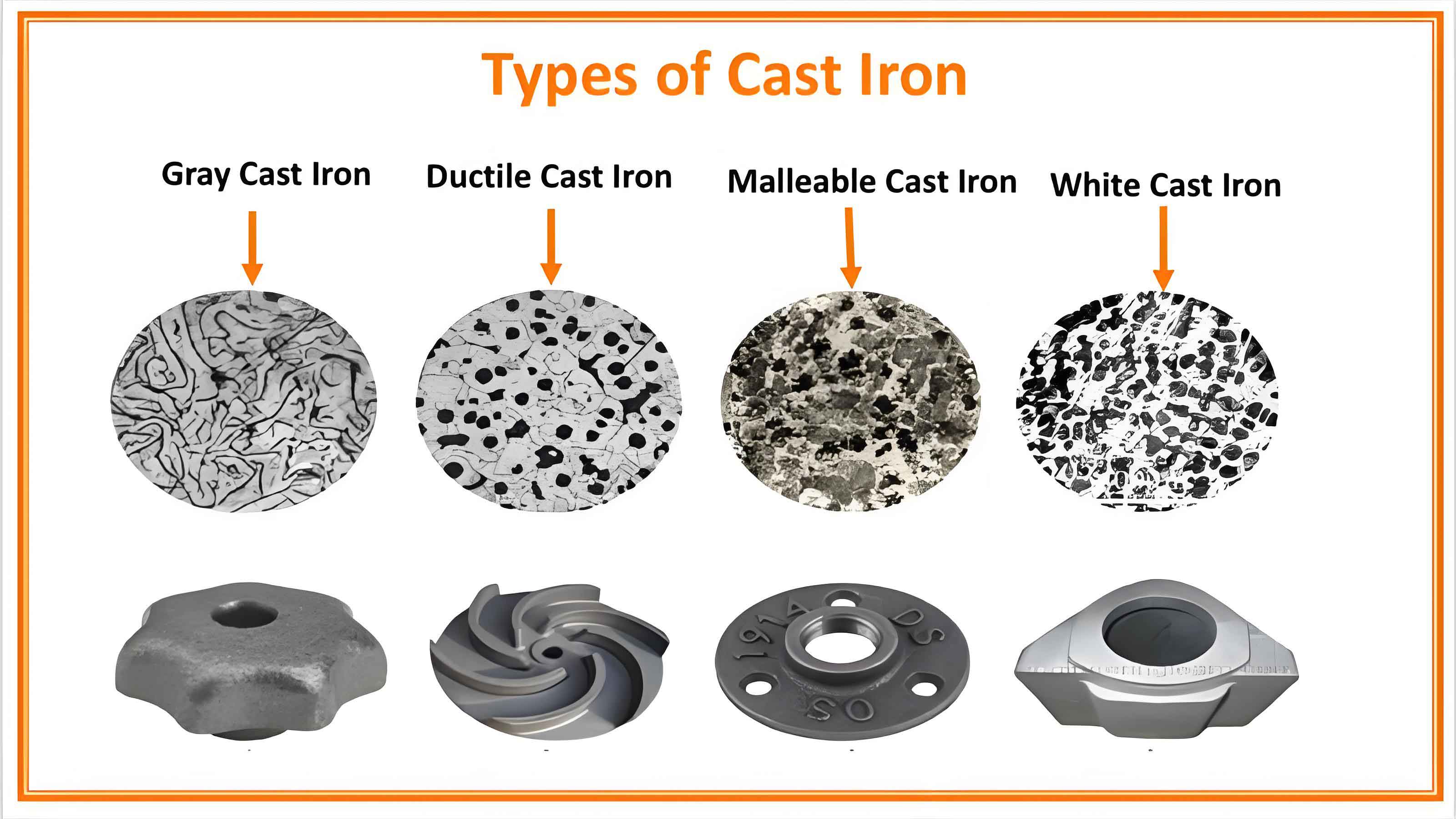
To work effectively with the cast of iron, manufacturers and engineers must select the correct metallurgical grade. The cooling rate, inoculation processes, and chemical composition determine how the carbon precipitates during solidification, dividing cast iron into distinct families with vastly different performance profiles.
- CAST IRON METALLURGICAL FAMILIES
- Grey Iron (Lamellar Carbon)
- Ductile Iron (Spheroidal)
- White Iron (Iron Carbide)
- Malleable Iron (Heat-Treated)
Grey Cast Iron
Grey cast iron is the most widely produced cast metal by tonnage. Its defining characteristic is the presence of graphite in the form of flakes distributed throughout the iron matrix. When fractured, the exposed surface appears grey, hence the name.
- Mechanical Properties: Excellent vibration damping capacity, high machinability, and superior wear resistance. It handles compressive loads exceptionally well but has relatively low tensile strength and elongation.
- Primary Uses: Engine blocks, brake rotors, machine tool bases, and heavy-duty municipal manhole covers.
Ductile Cast Iron (Nodular Iron)
Ductile iron, also known as nodular or spheroidal graphite cast iron, is created by adding trace amounts of magnesium or cerium to the molten metal just before casting. This alters the shape of the graphite from sharp flakes to smooth, rounded nodules.
- Mechanical Properties: Combines the economic production benefits of grey iron with high tensile strength, impact resistance, and ductility. It bends rather than shatters under extreme stress.
- Primary Uses: High-pressure water and sewage pipes, automotive suspension components, and wind turbine main shaft housings.
White Cast Iron
White cast iron gets its name from the brilliant white crystalline fracture surface that appears when it breaks. In this alloy, nearly all the carbon is combined with iron as iron carbide (cementite) rather than free graphite.
- Mechanical Properties: Extremely hard, brittle, and highly resistant to wear and abrasion. However, it is notoriously difficult to machine due to its extreme hardness.
- Primary Uses: Slurry pump liners, brick mold wear plates, and milling balls used in the mining industry.
Malleable Cast Iron
Malleable iron is produced by heat-treating white cast iron through a prolonged annealing process that can last several days. This thermal cycle breaks down the iron carbides into rosette-like aggregates of graphite.
- Mechanical Properties: Offers good ductility, toughness, and shock resistance, making it suitable for parts that require moderate shaping after casting.
- Primary Uses: Electrical conduit fittings, railroad track components, and heavy-duty agricultural equipment linkages.
The Manufacturing Process: From Raw Ore to Finished Castings
Producing components from the cast of iron involves a precise sequence of metallurgical preparation, mold creation, pouring, and finishing. Mastering this workflow ensures structural integrity and dimensional accuracy in the final product.
- Raw Material Melting
- Pattern & Mold Preparation
- Pouring & Solidification
- Shakeout & Cleaning
- Heat Treatment & Machining
1. Melting and Alloying
Scrap iron, steel, pig iron, and selected ferroalloys are charged into a cupola furnace, induction furnace, or electric arc furnace. The charge is melted at temperatures exceeding 1,250°C to 1,500°C depending on the exact alloy. During this phase, chemists sample the melt to adjust carbon, silicon, and trace element levels to meet precise engineering specifications.
2. Mold Making and Pattern Engineering
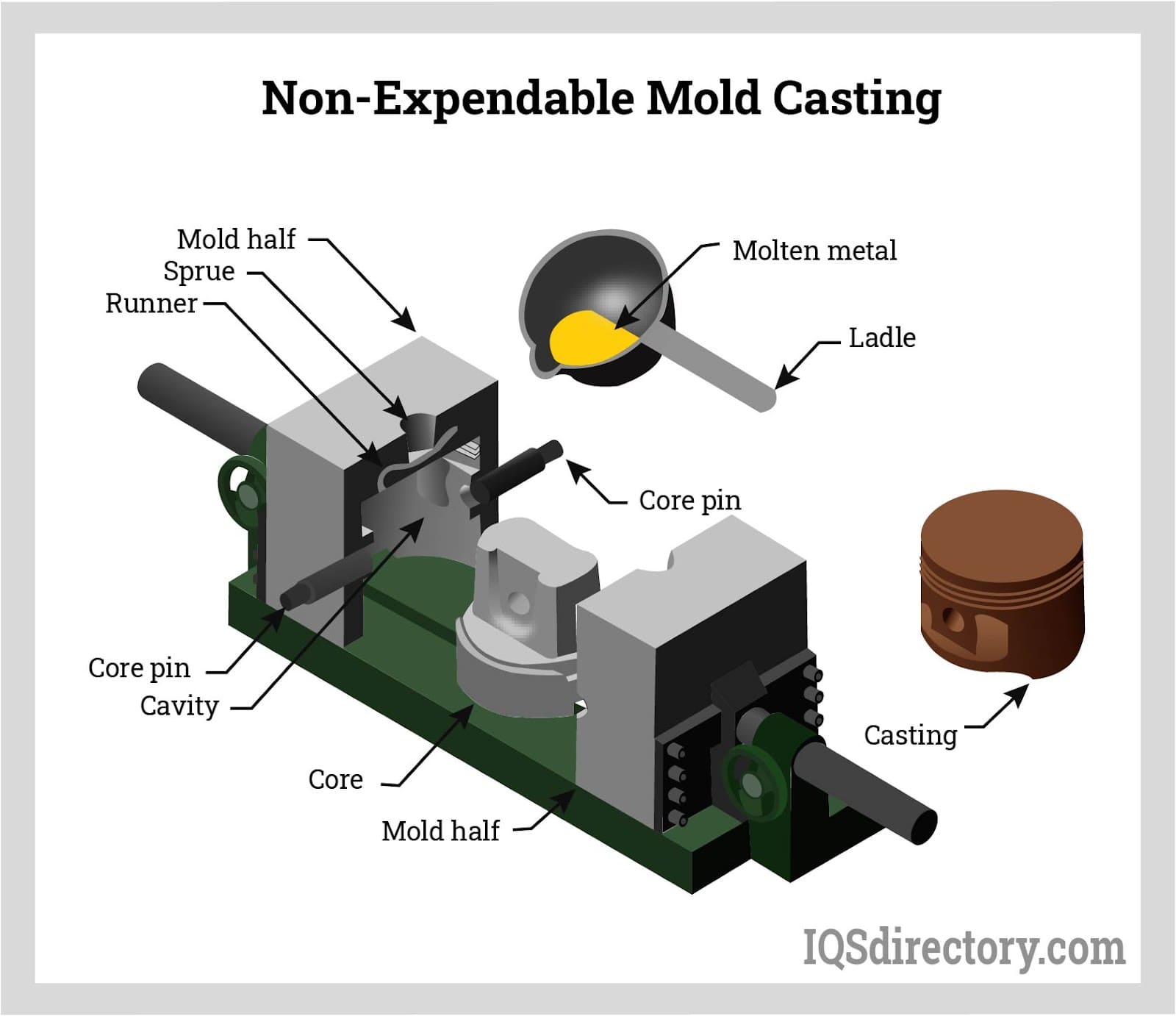
Most industrial iron castings are produced using sand casting techniques. A pattern—an exact replica of the desired object, slightly oversized to account for metal shrinkage—is packed into molding sand mixed with binders. Modern foundries use green sand (moist silica sand, clay, and water) or chemically bonded cold-box sand systems. The pattern is withdrawn, leaving a hollow cavity that defines the exterior shape of the component.
3. Pouring and Solidification
The molten metal is transferred from the furnace into a refractory-lined ladle and poured smoothly into the gating system of the mold. As the liquid metal cools, it undergoes phase transformation. Proper gating and riser design are critical during this stage to feed liquid metal into the mold as it shrinks, preventing internal voids and shrinkage defects.
4. Shakeout, Cleaning, and Finishing
Once the iron has solidified and cooled sufficiently, the mold is broken apart during the shakeout process. The rough casting is separated from the sand, and the gating system, risers, and flash are removed using saws, grinding wheels, or plasma cutting. Shot blasting is subsequently employed to remove residual burnt-on sand and scale from the casting surface.
Comparison of Cast Iron Grades and Their Characteristics
Selecting the appropriate type of cast iron depends on balancing mechanical demands, machining requirements, and budget constraints. The following table compares the primary families of cast iron.
| Cast Iron Type | Graphite Morphology | Tensile Strength (MPa) | Ductility / Elongation | Machinability | Typical Industrial Application |
|---|---|---|---|---|---|
| Grey Iron | Flake graphite | 150 – 400 | Low (< 1%) | Excellent | Engine blocks, machine bases, brake drums |
| Ductile Iron | Spheroidal nodules | 400 – 900 | Moderate to High (3–20%) | Good | Pipelines, automotive crankshafts, wind turbine parts |
| White Iron | Combined carbon (cementite) | 150 – 400 (Comp.) | Very Low (0%) | Poor (Abrasive only) | Slurry pump liners, grinding balls, wear plates |
| Malleable Iron | Graphite rosettes | 300 – 700 | Moderate (5–15%) | Good | Electrical fittings, rail hardware, farm equipment |
Practical Applications in Culinary and Household Goods
Beyond heavy industry, the cast of iron holds a prominent place in residential kitchens and everyday life. Cast iron cookware—including skillets, Dutch ovens, griddles, and waffle irons—remains popular due to its unique thermal properties.
Thermal Mass and Heat Retention
Cast iron has a relatively low thermal conductivity compared to aluminum or copper, meaning it heats up slowly. However, once hot, it possesses immense thermal mass. It retains heat far longer than thin stainless steel pans, making it ideal for searing steaks, baking artisan bread, and slow-braising tough cuts of meat.
Seasoning and Non-Stick Properties
Bare cast iron cookware is porous. To prevent rusting and create a natural non-stick surface, pots and pans undergo a process called seasoning.
- The Seasoning Process: Oils or melted fats are applied to the iron surface and heated above their smoke point. This causes the unsaturated fatty acids to polymerize into a hard, slick, resinous coating bonded to the metal.
- Maintenance Requirements: Unlike modern non-stick pans coated with polytetrafluoroethylene (PTFE), seasoned cast iron requires hand washing with mild soap (or hot water alone, depending on tradition), thorough drying, and occasional light oiling to maintain its protective barrier.
Advantages and Limitations of Cast Iron
While the cast of iron offers unmatched benefits in specific engineering and culinary domains, it also presents distinct disadvantages that must be managed.
Key Advantages
- Cost-Effectiveness: Raw materials are inexpensive, and the casting process allows for the economical production of complex geometries that would be prohibitively expensive to machine from solid blocks of steel.
- Compressive Strength: Cast iron withstands massive compressive forces without buckling or failing.
- Damping Capacity: Grey iron absorbs mechanical vibrations and acoustic resonance exceptionally well, reducing noise and stabilizing industrial machinery.
- Wear Resistance: The graphite flakes or hard carbides provide natural lubricity and abrasion resistance in sliding contact applications.
Operational Limitations
- Brittleness: Most cast irons lack significant impact toughness. Sudden physical shocks can cause catastrophic fracturing.
- High Weight: Cast iron components are dense and heavy, which can be a disadvantage in mobile or aerospace applications where weight reduction is paramount.
- Corrosion Susceptibility: Uncoated or unseasoned iron oxidizes rapidly when exposed to moisture and oxygen, leading to rust formation that degrades structural integrity.
Common Troubleshooting and Maintenance Issues
Maintaining or repairing items made from the cast of iron requires understanding its unique metallurgical sensitivities, particularly regarding thermal shock and welding.
Thermal Shock and Cracking
Cast iron can crack easily if subjected to rapid, uneven temperature changes. In cookware, placing a cold pan onto a roaring burner or plunging a hot pan into cold water can cause localized thermal expansion differentials, resulting in cracking. In industrial settings, similar precautions apply during startup and shutdown cycles of heavy machinery housings.
Welding Challenges
Welding cast iron is notoriously difficult because the high carbon content causes the weld zone and heat-affected zone to form brittle white iron or martensite upon cooling, leading to immediate cracking.
- Remediation: Successful repair welding requires thorough preheating of the entire casting (often to 500°C–650°C), using specialized high-nickel electrodes or oxyfuel brazing rods, and implementing slow, controlled post-weld cooling to relieve residual stresses.
Frequently Asked Questions
Can cast iron be recycled?
Yes, cast iron is 100% recyclable. Foundries routinely melt down scrap iron and end-of-life castings in induction or cupola furnaces to produce new components without losing metallurgical quality.
Why does cast iron rust so easily?
Unprotected iron reacts with oxygen and ambient moisture to form hydrated iron oxide (rust). Because cast iron has an open, porous structure at the microscopic level, moisture can penetrate the surface easily unless sealed with paint, enamel, or a polymerized oil seasoning.
Is cast iron magnetic?
Yes, all common grades of cast iron (grey, ductile, malleable, and white) are ferromagnetic because they consist primarily of iron. They will readily attract permanent magnets.
How do you restore rusted cast iron cookware?
Rust on cookware can be removed mechanically using steel wool or a wire brush, or chemically through a vinegar soak. Once the bare grey metal is exposed, the item must be washed, dried completely, and re-seasoned by baking multiple thin layers of oil at high temperatures.
What is the difference between cast iron and cast steel?
Cast steel contains less than 2.1% carbon (typically under 0.5%), making it much stronger, more ductile, and less brittle than cast iron. However, cast steel has a higher melting point, flows less fluidly into molds, and is more expensive to produce.
Conclusion
The cast of iron bridges the gap between raw geological materials and functional human engineering. By understanding the distinct behaviors of grey, ductile, white, and malleable iron, manufacturers can design durable industrial components, while culinary enthusiasts can properly maintain generational cookware. Respecting the material's structural limitations—such as its susceptibility to thermal shock and brittleness—ensures that cast iron objects deliver reliable performance over decades of use.