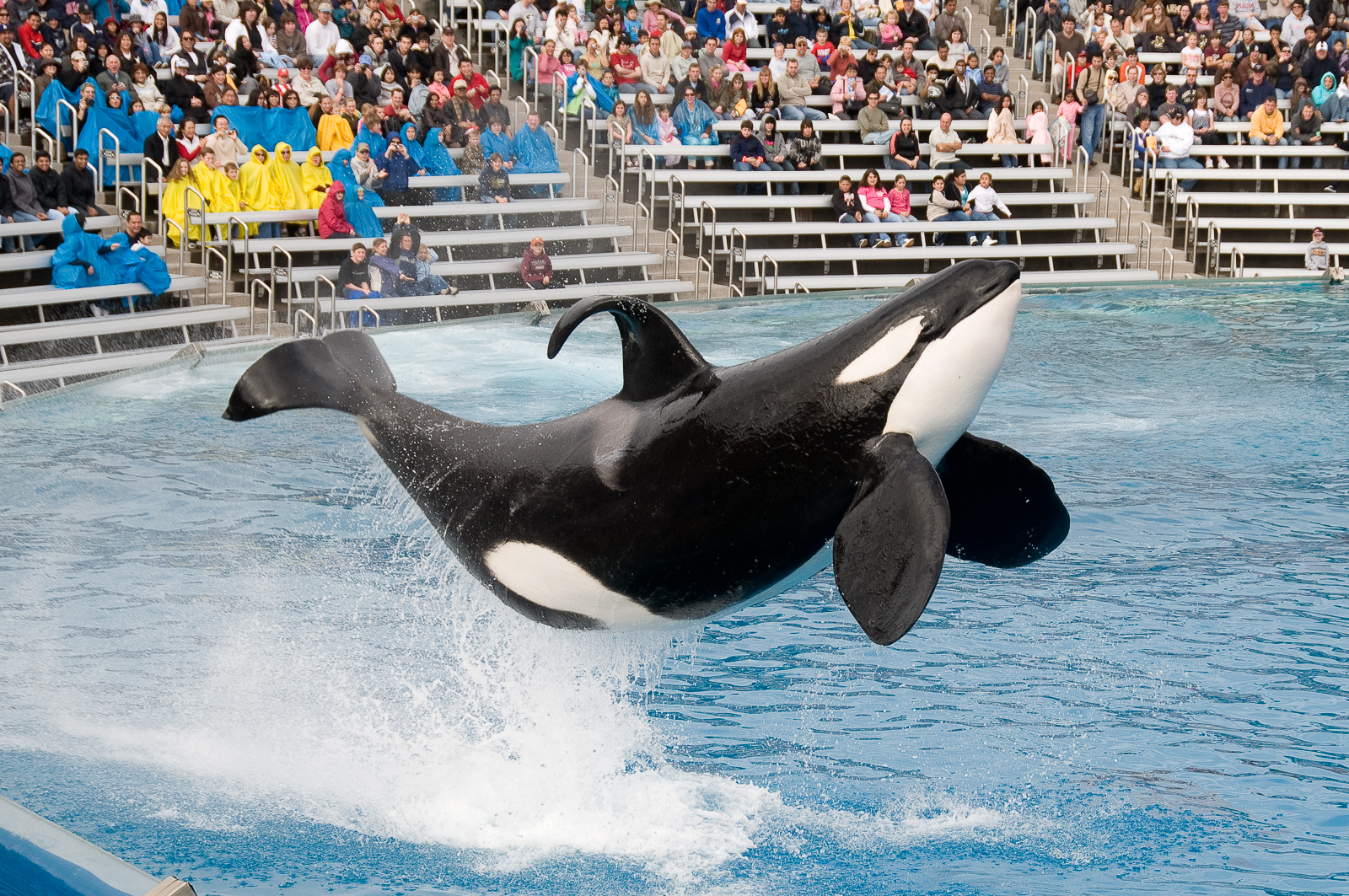
Tilikum was a prominent captive bull orca who became the focal point of a global debate regarding the ethics of cetacean captivity. Captured in 1983, he spent 33 years in marine parks, was involved in three human fatalities, and served as the central figure of the 2013 documentary Blackfish, which fundamentally altered public perception of marine mammal entertainment.
The Early Years: Capture and the Icelandic Origins
Tilikum’s story began in the North Atlantic. He was captured in November 1983 in Berufjörður, Iceland, when he was approximately two years old. At the time of his capture, he measured roughly 13 feet long. Following the standard practice of the era, young orcas were separated from their pods to be sold to marine parks across the globe. Tilikum was initially sent to Hafnarfjörður Marine Zoo in Iceland before being transferred to his first permanent home in Canada.
His capture was part of a larger trend in the late 1970s and early 1980s where collectors moved from the Pacific Northwest to Icelandic waters due to increasing legal restrictions and public outcry in the United States and Canada. This transition ensured a steady supply of "killer whales" for the burgeoning marine theme park industry.
Life at Sealand of the Pacific (1984–1992)
In 1984, Tilikum arrived at Sealand of the Pacific in Victoria, British Columbia. His time there was marked by social strife and restrictive living conditions. At Sealand, Tilikum was housed with two older female orcas, Haida and Nootka. Because orca societies are matriarchal, the young male was frequently the target of aggression from the females.
The physical environment at Sealand was particularly grueling. At night, for security and to prevent "gate-hopping" by intruders, all three whales were often confined to a "module"—a steel-walled, circular tank only 20 feet deep and 26 feet in diameter. For a growing bull orca like Tilikum, these quarters were incredibly cramped, leading to physical and psychological stress.
The Death of Keltie Byrne
On February 20, 1991, the first fatal incident involving Tilikum occurred. Keltie Byrne, a 20-year-old marine biology student and competitive swimmer, was working as a part-time trainer at Sealand. After she slipped and fell into the pool containing Tilikum, Haida, and Nootka, the whales pulled her underwater. Witnesses reported that the whales prevented her from surfacing. Despite rescue attempts by other staff, Byrne drowned. Following this tragedy, Sealand of the Pacific eventually closed its doors, and Tilikum was sold to SeaWorld.
The SeaWorld Era: Breeding and Performance
Tilikum arrived at SeaWorld Orlando in January 1992. Standing at 22.5 feet and weighing over 12,000 pounds, he was the largest orca in captivity. While his size made him a star attraction for the "Shamu" shows, his primary value to SeaWorld was biological.
A Prolific Stud Whale
Tilikum was the cornerstone of SeaWorld’s breeding program. Over his lifetime, he sired 21 calves, including notable offspring like Tuar, Tekoa, and Nakai. Because his genetic material was used so extensively through artificial insemination, a significant percentage of the orcas currently in the SeaWorld fleet are his direct descendants. This high concentration of Tilikum's lineage has been a point of contention for critics who argue that his history of aggression was a trait that should not have been perpetuated.
The Incident of Daniel Dukes (1999)
The second fatality occurred on July 6, 1999. A 27-year-old man named Daniel Dukes stayed in the park after closing and apparently entered Tilikum’s tank. His body was found the next morning draped across Tilikum’s back. While the medical examiner ruled the cause of death as drowning, the autopsy noted numerous post-mortem abrasions and injuries, illustrating the power and potential volatility of the whale.
The Dawn Brancheau Tragedy (2010)
The most high-profile incident occurred on February 24, 2010. Dawn Brancheau, an experienced 40-year-old trainer, was interacting with Tilikum during a "Dine with Shamu" session. As Brancheau lay on a submerged platform, Tilikum pulled her into the water. The attack was violent and prolonged; Brancheau suffered multiple traumatic injuries, including the scalping of her hair and the dismemberment of her arm, before ultimately drowning.
This event was a turning point for the industry. Unlike the previous incidents, this occurred in front of a live audience at one of the world's most famous theme parks. It triggered an immediate investigation by the Occupational Safety and Health Administration (OSHA) and led to significant legal battles regarding the safety of human-orca interactions.
| Key Milestone | Date | Significance |
|---|---|---|
| Capture | Nov 1983 | Captured off the coast of Iceland at age ~2. |
| First Fatality | Feb 1991 | Death of Keltie Byrne at Sealand of the Pacific. |
| Transfer | Jan 1992 | Tilikum moved to SeaWorld Orlando. |
| Second Fatality | July 1999 | Death of Daniel Dukes at SeaWorld Orlando. |
| Third Fatality | Feb 2010 | Death of Dawn Brancheau at SeaWorld Orlando. |
| Blackfish Release | Jan 2013 | Documentary premiered at Sundance Film Festival. |
| Death | Jan 2017 | Tilikum died of a persistent bacterial lung infection. |
The Blackfish Effect and Cultural Shift
In 2013, the documentary Blackfish, directed by Gabriela Cowperthwaite, was released. The film focused on Tilikum’s life to illustrate the psychological toll of captivity on highly intelligent, social animals. The "Blackfish Effect" was profound:
- Public Opinion: Attendance at SeaWorld parks saw a notable decline in the years following the film's release.
- Corporate Partnerships: Major companies, including Southwest Airlines and Mattel, ended their promotional partnerships with the park.
- Legislative Action: The film influenced the California Orca Protection Act, which bans the captive breeding of orcas and their use for theatrical performances.
SeaWorld vehemently contested the film’s accuracy, labeling it as propaganda. However, the pressure eventually forced the company to announce in 2016 that it would end its orca breeding program and phase out theatrical "Shamu" shows in favor of more naturalistic "Orca Encounters."
Biological and Psychological Considerations of Captivity
To understand the controversy surrounding Tilikum, one must examine the biological differences between wild and captive orcas. Orcas (Orcinus orca) are apex predators with complex social structures and vast migratory patterns, often traveling up to 100 miles a day.
Dorsal Fin Collapse
Tilikum was well-known for his collapsed dorsal fin, a condition seen in nearly 100% of captive adult male orcas but rarely in the wild (where it is typically the result of injury or malnutrition). Scientists suggest that in captivity, the lack of water pressure from deep diving and the amount of time spent at the surface cause the collagen in the fin to soften and fold over.
Behavioral Anomalies
Marine biologists, such as those featured in NOAA Fisheries research, emphasize that orcas in the wild have no recorded history of killing humans. The aggression seen in Tilikum is often attributed to "psychosis" or extreme stress caused by:
- Acoustic Deprivation: In concrete tanks, the orcas' sonar bounces off walls, creating a "hall of mirrors" effect that can be distressing.
- Social Isolation: Tilikum was often separated from other whales for his own safety or the safety of others, leading to profound loneliness for a social species.
- Dental Issues: Captive orcas often chew on the steel gates and concrete walls of their tanks out of boredom or frustration, leading to broken teeth that require painful drilling and daily flushing to prevent infection.
Legal and Safety Reforms Following Tilikum’s Incidents
The death of Dawn Brancheau led to a landmark legal battle. OSHA cited SeaWorld for "willful" safety violations, arguing that the company knowingly exposed trainers to recognized hazards.
The OSHA ruling eventually mandated that trainers be separated from orcas by physical barriers. This effectively ended "water work," where trainers swam with the whales during performances. SeaWorld appealed the ruling multiple times, but the U.S. Court of Appeals for the D.C. Circuit upheld the citations in 2014, concluding that the danger of working with orcas was an inherent part of the job that SeaWorld had failed to mitigate.
Tilikum’s Final Years and Death
In his final years, Tilikum's health declined. He suffered from a persistent and drug-resistant bacterial lung infection (Mycobacterium avium complex). On January 6, 2017, SeaWorld announced that Tilikum had passed away. He was estimated to be 35 years old—well within the average lifespan for a male orca in captivity, but significantly younger than the 50 to 60 years many males can reach in the wild.
As of 2026, Tilikum’s legacy remains a cornerstone of the animal rights movement. His story has accelerated the transition toward "sea sanctuaries," such as those proposed by the Whale Sanctuary Project, which aim to provide retired captive cetaceans with a more natural environment in protected seaside coves.
Frequently Asked Questions
Was Tilikum aggressive toward people before he was captured?
No. There is no documented evidence of wild orcas being aggressive toward humans. Tilikum was only two years old when he was taken from his family pod. His aggressive behaviors developed later in life and are widely believed by experts to be a byproduct of the stress, confinement, and social isolation experienced in captivity.
Why didn't SeaWorld release Tilikum back into the wild?
Releasing a long-term captive orca is exceptionally complex. By the time the public outcry peaked, Tilikum had spent over three decades in captivity, was dependent on human care for food, and suffered from chronic health issues. Experts feared he lacked the hunting skills and physical stamina to survive in the North Atlantic, and he might have introduced captive-born pathogens to wild populations.
How many orcas are still in captivity as of 2026?
While the numbers fluctuate due to births and deaths, the global population of captive orcas has been steadily declining. Following SeaWorld's 2016 decision to end breeding, the current residents of their parks are the last generation of orcas they will hold. Several dozen orcas remain in facilities in China, Russia, and other parts of the world, though international pressure continues to mount against these practices.
Did Tilikum’s children inherit his aggression?
There is no scientific consensus that Tilikum’s aggression was purely genetic; it is more likely a result of his specific environmental stressors. However, some of his offspring have also been involved in "incidents" or displayed signs of social instability. Critics of the breeding program argue that regardless of genetics, the captive environment itself is the primary catalyst for such behavior.
What happened to the trainers who worked with him?
Many of Tilikum's former trainers became vocal advocates for animal welfare. Several were featured in Blackfish, where they shared their experiences and expressed regret over the conditions Tilikum was kept in. Today, trainers at major parks work with orcas from behind barriers, focusing on husbandry and medical behaviors rather than theatrical stunts.
Summary of Next Actions
For those interested in the ongoing welfare of orcas, the most practical next step is to support legislation that protects marine habitats and promotes the development of seaside sanctuaries. You can also monitor the progress of the "Orca Responsibility and Care Act" and similar international initiatives aimed at ending the era of cetacean entertainment.