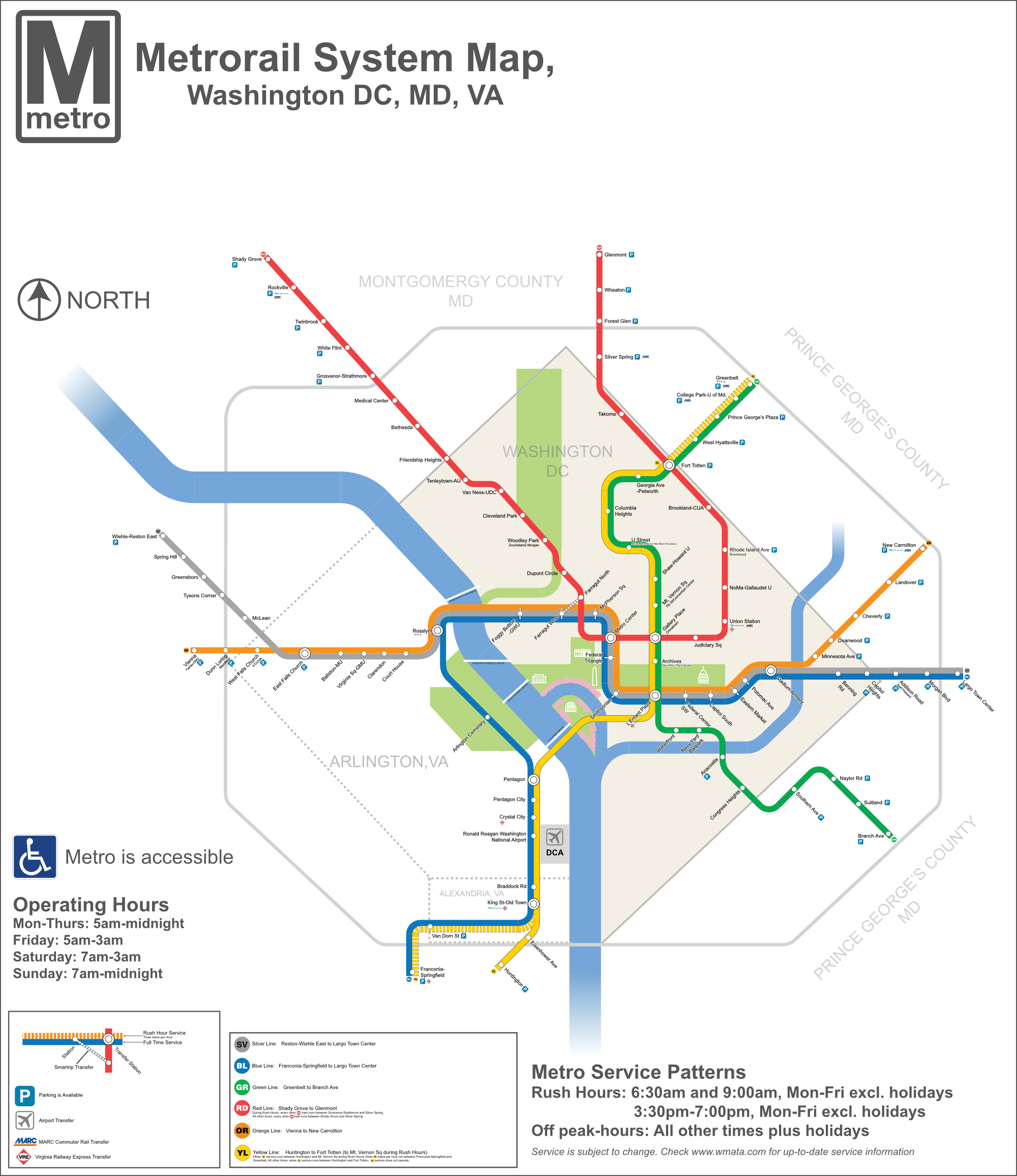
The WMATA Silver Line is a rapid transit rapid-rail route operated by the Washington Metropolitan Area Transit Authority, connecting Fairfax and Loudoun counties in Virginia with downtown Washington, D.C., and Prince George's County in Maryland. It spans multiple major commercial districts, residential hubs, and Dulles International Airport, functioning as a vital transportation artery for the National Capital Region.
Overview and History of the WMATA Silver Line
The Washington Metropolitan Area Transit Authority (WMATA) operates the Metrorail system, which serves a vast network spanning the District of Columbia, suburban Maryland, and Northern Virginia. Among its modern expansions, the Silver Line stands out as a transformative project designed to link fast-growing technology corridors, government contractors, and aviation hubs directly to the core of the federal district.
Conceived decades prior to its actual groundbreaking, the Silver Line project was executed in two major phases to manage its immense scale, financial commitments, and engineering complexities. Phase 1 extended service from a junction west of East Falls Church through Tysons Corner to Wiehle-Reston East, opening to passenger traffic in July 2014. This initial segment immediately reshaped the Tysons Corner area, catalyzing high-density transit-oriented development, mixed-use commercial properties, and multi-family residential towers that transformed a once auto-centric edge city into a walkable urban center.
Phase 2 extended the route further west, connecting Reston through Dulles International Airport and terminating at Ashburn in eastern Loudoun County. Following extensive testing, safety certifications, and operational rehearsals, Phase 2 revenue service officially commenced in November 2022. This milestone integrated Washington Dulles International Airport into the rapid transit grid for the first time via a direct rail connection, providing international travelers, airport employees, and regional commuters with a predictable alternative to highway transit along the congested Interstate 66 and Dulles Access Road corridors.
Route Alignment and Major Stations
The Silver Line shares tracks with the Orange Line in the core of the Washington D.C. metropolitan network before diverging into its dedicated western alignment. Commencing its eastward journey from Ashburn Station, the route travels through Loudoun and Fairfax counties, crosses the Potomac River corridor, traverses Arlington and the District of Columbia, and ultimately terminates in Prince George's County at Largo, sharing its eastern terminal stretch with the Blue Line.
Key Segments and Regional Connectivity
The infrastructure of the Silver Line incorporates elevated rail structures, at-grade medians along toll roads, and underground subway stations. The integration of the line into the broader Metrorail system requires coordination with intersecting lines, particularly at transfer hubs such as Rosslyn, Courthouse, and the core transfer stations in downtown Washington.
- Loudoun and Western Fairfax Segment: Encompassing Ashburn, Innovation Center, and Herndon, this suburban portion serves sprawling office parks, residential communities, and emerging technology hubs.
- Dulles Airport Station: A dedicated aerial station connected to the main terminal via an enclosed pedestrian walkway equipped with moving sidewalks, providing seamless access to domestic and international flights.
- Tysons Urban Core: Comprising McLean, Tysons, and Greensboro stations, this segment anchors a high-intensity commercial district featuring major retail centers, corporate headquarters, and dense residential nodes.
- Core Shared Alignment: Merging with Orange and Blue Line tracks west of East Falls Church, the line transits through key regional hubs, allowing passengers to move between Virginia and downtown D.C. without physical transfers.
| Station Name | Jurisdiction | Key Connections & Features | Parking Availability |
|---|---|---|---|
| Ashburn | Loudoun County, VA | Western terminal, bus connections, garage parking | Available (Paid) |
| Washington Dulles International Airport | Fairfax County, VA | Direct pedestrian access to main terminal | Available (Airport Garage) |
| McLean | Fairfax County, VA | Pedestrian bridge access, bus transit links | Available (Paid) |
| Wiehle-Reston East | Fairfax County, VA | Major bus transfer hub, high-capacity garage | Available (Paid) |
| Rosslyn | Arlington County, VA | Orange and Blue Line transfer point | None |
Operational Characteristics and Service Patterns
Operating a complex transit line across multiple jurisdictions requires strict adherence to scheduling parameters, signal systems, and fleet management. The Silver Line utilizes WMATA’s modern rolling stock, predominantly featuring the 7000-series railcars, which offer wider aisles, digital passenger information displays, and enhanced safety configurations.
Service frequencies vary by time of day, day of the week, and overarching network maintenance programs managed by WMATA. During peak morning and evening commuting windows, train frequencies are scheduled to maximize passenger throughput, while off-peak hours and weekends feature standardized headways. Riders should monitor real-time train tracking tools, such as MetroHero or the official WMATA mobile application, to verify arrival times and account for single-tracking or scheduled track maintenance.
Fares on the Silver Line are distance-based, calculated using SmarTrip cards or mobile payment integrations. Peak fares apply during standard weekday commuting hours, while off-peak rates govern travel during weekends, late evenings, and federal holidays. Passengers transferring between Metrorail and regional bus systems—such as Fairfax Connector, Loudoun County Transit, or Metrobus—receive valid transfer discounts when utilizing a registered SmarTrip card or digital equivalent.
Navigating Dulles Airport Access via the Silver Line
One of the primary economic and logistical drivers of the Silver Line Phase 2 expansion is the direct rail link to Washington Dulles International Airport. The station infrastructure is engineered to accommodate travelers carrying luggage, featuring step-free pathways, high-capacity elevators, escalators, and direct weather-protected connections to the airport's ticketing and baggage claim levels.
Travelers departing from downtown Washington, D.C., or Arlington can board a direct Silver Line train bound for Ashburn and arrive at the airport terminal without encountering highway congestion or rideshare surge pricing. The journey from Metro Center to Dulles Airport typically takes approximately 50 to 60 minutes, offering a reliable alternative for flight departures.
- [Downtown D.C. / Metro Center]
- [Rosslyn / Court House] (Via Shared Orange/Blue/Silver Track)
- [Tysons Corner Stations] (Via Exclusive Silver Line Track Westbound)
- [Washington Dulles International Airport Station]
- [Main Airport Terminal] (Via Enclosed Pedestrian Walkway)
Common Challenges and Mitigation Strategies
While the Silver Line provides extensive regional connectivity, commuters and travelers occasionally encounter operational hurdles that require advance preparation. Understanding these challenges helps optimize travel times and mitigates potential delays.
- Track Maintenance and Rebuild Programs: WMATA frequently executes capital maintenance initiatives, including rail replacement, signal upgrades, and structural inspections. These programs often result in single-tracking or weekend line segment closures, with free shuttle buses replacing rail service between affected stations.
- Weather-Related Disruptions: Severe winter weather or heavy summer storms can impact outdoor and at-grade sections of the track, particularly along the Dulles Toll Road median. WMATA implements modified operating schedules during severe weather events to protect passenger safety.
- Transfer Complexities: Navigating multi-line transfers during rush hour requires familiarity with station layouts. Passengers transferring at core junction stations should consult station signage and platform displays to ensure boarding the correct train destination.
Frequently Asked Questions
How long does it take to ride the Silver Line from Ashburn to downtown Washington, D.C.?
The complete journey from the western terminal at Ashburn to Metro Center in downtown D.C. takes approximately 60 to 70 minutes. Actual travel times fluctuate depending on the time of day, operating speeds, and any active maintenance zones along the corridor.
Is parking available at all Silver Line stations?
No. While many suburban stations in Fairfax and Loudoun counties feature large parking garages managed by WMATA or local county transit authorities, urban stations—particularly those in Tysons Corner and Arlington—either lack commuter parking facilities or rely on commercial, paid parking structures.
How do I pay for my fare on the Silver Line?
Fares are processed exclusively through electronic payment methods, primarily using a reloadable plastic SmarTrip card or a digital SmarTrip card loaded onto a smartphone digital wallet. Paper farecards are no longer accepted on the Metrorail system.
Can I bring large luggage on the Silver Line trains?
Yes. The Silver Line, particularly the segment serving Dulles International Airport, is designed to accommodate travelers with luggage. Railcars feature wide doorways and open interior configurations, though passengers should keep aisles clear and maintain control of their bags during transit.
What should I do if my train is delayed due to maintenance?
WMATA provides real-time service advisories via its official website, mobile application, and social media channels. When scheduled track work closes portions of the line, free shuttle buses are deployed to bridge the gap between affected stations, adding time to the total journey.
Practical Recommendations for Commuters and Travelers
To ensure a seamless travel experience on the WMATA Silver Line, passengers should verify service advisories prior to departure, particularly during weekends and federal holidays when track maintenance is most frequent. Purchasing and registering a SmarTrip card ahead of time minimizes transaction delays at station fare gates. For airport travelers, allowing an additional 30 minutes of travel buffer beyond standard transit estimates helps account for potential operational pauses or station transfers.