The Iraqi dinar is the official currency of the Republic of Iraq, issued and regulated by the Central Bank of Iraq under the ISO 4217 currency code IQD. Understanding the Iraqi dinar requires separating institutional monetary policy and macroeconomic realities from persistent retail scams and speculative myths that have circulated in global retail investment markets for decades.
Historical Evolution of the Iraqi Dinar
The modern financial history of Iraq provides essential context for understanding the current valuation, structure, and perception of the Iraqi dinar. The currency has undergone significant political, economic, and structural disruptions across multiple decades, transforming from a historically strong regional currency into a heavily managed fiat medium.
Pre-1990s Stability and the Gold Standard Era
Introduced into circulation in 1932, the Iraqi dinar initially replaced the Indian rupee at a fixed rate and was pegged directly to the British pound sterling. During the mid-20th century, supported by substantial state revenues derived from expanding petroleum production and strategic national infrastructure projects, the currency maintained significant international purchasing power. Through the 1950s, 1960s, and 1970s, the dinar traded at high official nominal exchange rates, functioning as a stable medium of exchange within the Middle East.
The 1991 Gulf War and the "Saddam Dinar" Era
Following the 1991 Gulf War and the implementation of sweeping international economic sanctions, the stability of the Iraqi currency collapsed. The Central Bank of Iraq faced extreme fiscal pressures, leading to the rapid printing of unbacked paper currency to finance state expenditures. This monetary expansion triggered hyperinflation.
Compounding this instability, the Central Bank issued a new series of banknotes printed locally without advanced security features, which became widely known as the "Saddam dinar." Meanwhile, the Kurdish-controlled northern governorates continued using an older British-printed banknote series, commonly referred to as the "Swiss dinar." Despite lacking official backing, the Swiss dinar retained relative value and stability due to its limited supply compared to the hyperinflated currency circulating in the rest of the country.
Post-2003 Monetary Reform and Currency Exchange
Following the coalition invasion of Iraq in 2003, the Coalition Provisional Authority initiated a massive monetary reconstruction effort under the leadership of the Central Bank of Iraq. Between October 2003 and January 2004, the authority executed a currency exchange program.
Old banknotes bearing the likeness of Saddam Hussein were replaced with a unified, highly secure new series of Iraqi dinar notes printed by international security printers. Citizens exchanged old notes for new ones at a par value of one-to-one, while the regional Swiss dinar notes were exchanged at a favorable premium reflecting their historical scarcity. This reform unified the national monetary system and established the baseline framework for the contemporary currency.
Central Bank Management and Monetary Policy
The Central Bank of Iraq (CBI), established under the Central Bank of Iraq Law, operates as the sole authority responsible for formulating monetary policy, maintaining price stability, and managing the nation's foreign exchange reserves.
Exchange Rate Mechanisms and Foreign Reserves
The CBI maintains a managed peg against the United States dollar. To support this peg, the central bank conducts daily foreign currency auctions—formally structured as the currency auction window—where commercial banks purchase U.S. dollars at an official exchange rate set by the CBI to finance authorized international trade and capital transactions.
The stability of the Iraqi dinar depends heavily on the country's foreign exchange reserves, which are accumulated primarily through state-controlled crude oil exports. Because petroleum accounts for the vast majority of Iraq's export earnings and government revenue, fluctuations in global oil prices directly influence the adequacy of the CBI's foreign reserves and its capacity to defend the official exchange rate.
Monetary Policy Instruments
To manage domestic liquidity and curb inflationary pressures, the CBI utilizes several conventional monetary policy tools:
- Policy Interest Rates: The CBI adjusts its base lending and deposit rates to influence commercial bank borrowing costs and retail credit expansion.
- Reserve Requirements: Commercial operating within Iraq must maintain a specified percentage of their customer deposits as reserves held directly with the central bank.
- Overnight Facilities: The CBI provides standing lending and deposit facilities to help commercial banks manage short-term liquidity deficits and surpluses.
Retail Investment Myths and Speculative Scams
For over two decades, the Iraqi dinar has been the subject of extensive international retail speculation, driven largely by misinformation propagated through online forums, social media channels, and specialized currency brokerages.
The Mechanics of Retail Dinar Scams
Promoters of speculative dinar investments frequently target retail buyers by marketing banknotes as high-potential investments. These marketing campaigns often rely on several persistent falsehoods:
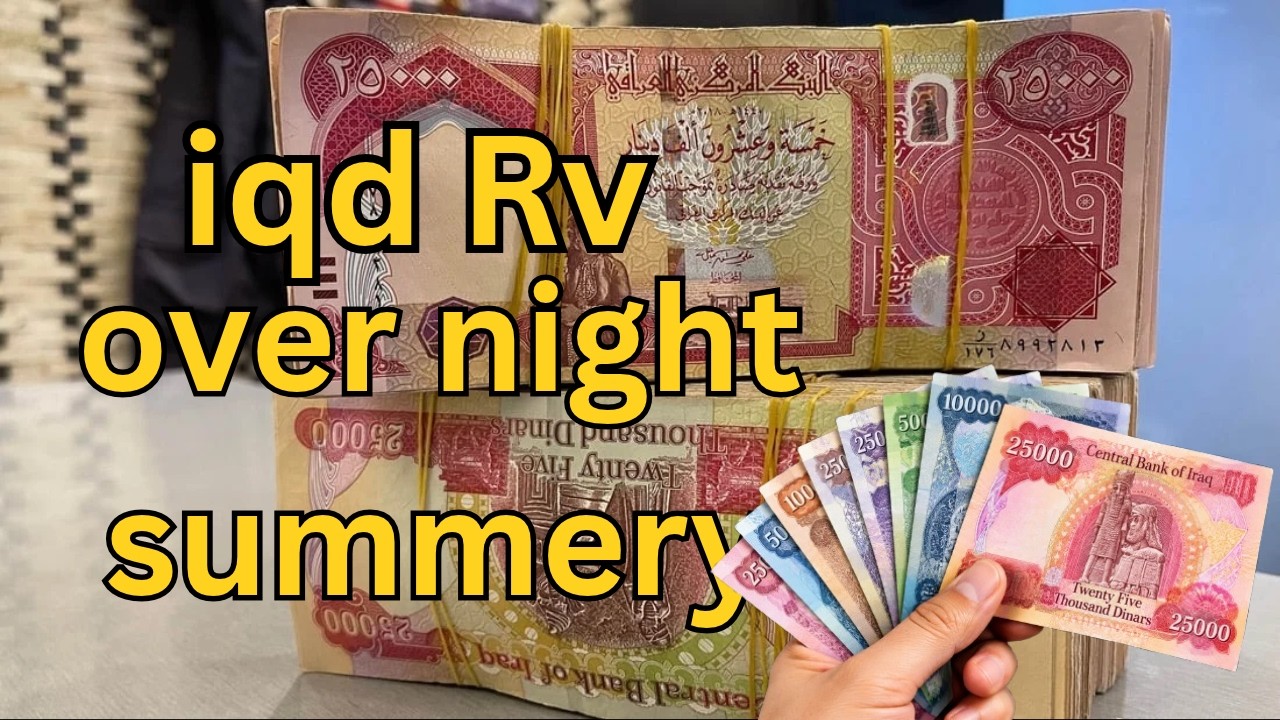
- The "Revaluation" (RV) Myth: Sellers claim that the Iraqi government or international organizations will artificially revalue the currency overnight to match or exceed its historical 1980s exchange rate, turning small retail purchases into multi-million-dollar windfalls.
- Misinterpretation of Denominations: Speculators often confuse nominal currency denomination with intrinsic economic value, assuming that holding large numbers of low-value, high-denomination notes guarantees proportional future wealth gains.
- Fabricated Geopolitical Catalysts: Scammers frequently invent stories regarding impending monetary reforms, global currency resets, or interventions by international bodies like the International Monetary Fund (IMF) or the U.S. Federal Reserve to manufacture false urgency.
Regulatory Warnings and Investor Protection
Financial regulators worldwide—including the U.S. Securities and Exchange Commission (SEC), the Financial Industry Regulatory Authority (FINRA), and state banking departments—have issued numerous investor alerts regarding foreign currency bucket shops and speculative currency sales.
Purchasing physical banknotes as an investment is generally inefficient due to high retail dealer markups (spreads), the lack of secondary liquid markets for retail holders, and the absence of interest or yield generation. Physical currency stored at home does not earn returns, faces security risks, and incurs substantial transaction costs when converting back to local currency through authorized channels.
Comparing Iraqi Dinar Acquisition Channels
Individuals acquiring Iraqi dinars for legitimate travel, academic research, or numismatic collection must navigate various channels, contrasting sharply with unregulated speculative brokers.
| Acquisition Channel | Regulatory Oversight | Primary Purpose | Liquidity & Spread | Associated Risks |
|---|---|---|---|---|
| Authorized Commercial Banks | High (Central Bank / Regulated Banking) | International trade, legitimate travel, wire transfers | Narrow retail spread, official exchange rates | Limited availability of physical retail banknotes for walk-in customers |
| Licensed Money Services Businesses (MSBs) | Moderate (Registered Financial Services) | Remittances, authorized foreign exchange | Moderate spread | Variable fees, compliance documentation requirements |
| Specialized Online Currency Dealers | Low to Moderate (Varies by jurisdiction) | Speculative retail sales, numismatics | Wide retail markup (high spreads) | High risk of inflated pricing, aggressive sales tactics, unverified storage practices |
Frequently Asked Questions
Can foreign investors legally purchase Iraqi dinars?
Yes, purchasing Iraqi dinars is legal in most jurisdictions, provided transactions comply with local anti-money laundering (AML) and know-your-customer (KYC) regulations. However, owning physical banknotes does not constitute an investment in the Iraqi economy or sovereign debt instruments.
Why is the Iraqi dinar exchange rate significantly lower than the U.S. dollar?
The exchange rate reflects the large total nominal supply of currency issued following post-2003 monetary stabilization programs, combined with domestic economic structures, inflation history, and the reliance of the national economy on a single commodity export sector (petroleum). Nominal exchange rate values do not inherently measure the strength or health of an underlying national economy.
Can physical Iraqi dinar banknotes be exchanged back into U.S. dollars easily?
Exchanging physical dinar notes back into hard currency can be difficult outside of Iraq or specialized authorized dealers. Most major international commercial banks do not maintain liquid markets for retail Iraqi dinar exchanges, and secondary dealers typically apply high transaction fees and wide bid-ask spreads.
What is the difference between the official exchange rate and the parallel market rate?
The official exchange rate is established directly by the Central Bank of Iraq for authorized trade transactions through its currency auctions. The parallel market rate refers to the rates negotiated in commercial street markets or non-official channels, which can fluctuate based on localized commercial demand for foreign cash and domestic liquidity conditions.
Are older Iraqi dinar banknotes featuring Saddam Hussein still legal tender?
No. Banknotes issued prior to the 2003 monetary reform—specifically those featuring the portrait of Saddam Hussein—were demonetized following the introduction of the new currency series and possess no official monetary value, though they retain nominal interest for currency collectors and numismatists.
Practical Guidance and Next Actions
For individuals evaluating interactions with the Iraqi dinar, maintaining a strict distinction between official monetary economics and retail speculation is essential. Those requiring currency for legitimate travel or commercial business in Iraq should rely exclusively on regulated international banking institutions and authorized financial intermediaries rather than unregulated retail brokers. Prospective buyers should verify all institutional credentials, examine transaction fees and spreads carefully, and consult official advisories published by financial regulatory authorities regarding foreign currency transactions.