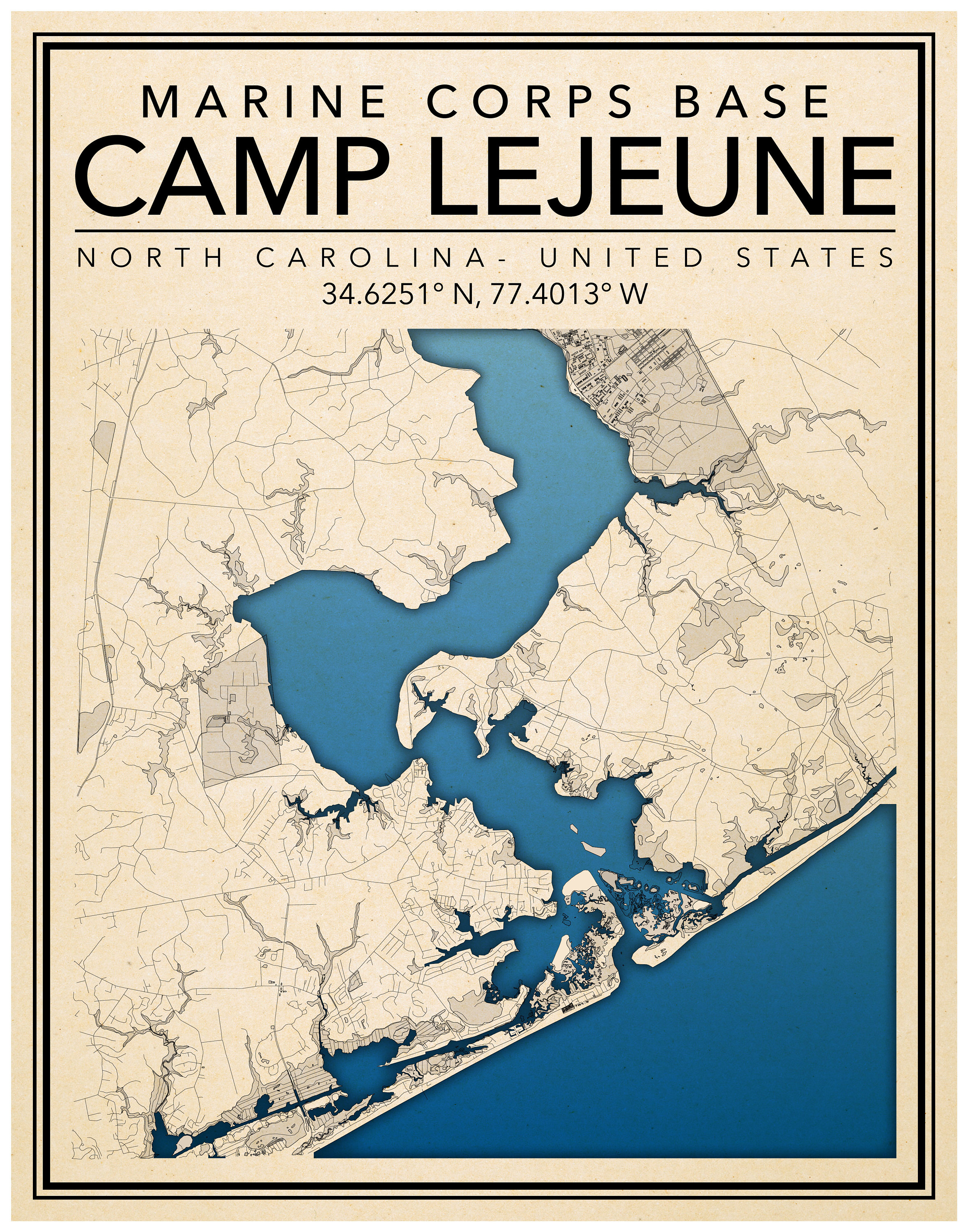
The Camp Lejeune water contamination issue centers on toxic chemicals—specifically industrial solvents like trichloroethylene (TCE) and tetrachloroethylene (PCE)—that polluted drinking water supplies at Marine Corps Base Camp Lejeune in North Carolina between August 1, 1953, and December 31, 1987. This contamination has led to extensive federal legislation, notably the Camp Lejeune Justice Act of 2022, which allows affected veterans, civilian workers, and family members to pursue compensation through administrative claims and federal lawsuits.
Historical Background and Water Contamination Discovery
Marine Corps Base Camp Lejeune, established in 1941 in Onslow County, North Carolina, grew rapidly during the Cold War and subsequent military deployments. To support thousands of service members, their families, and administrative staff, the base developed its own water treatment plants. The two primary systems serving the residential and operational areas affected by the contamination were the Tarawa Terrace and Hadnot Point water treatment plants.
The contamination occurred over several decades, originating from a combination of industrial activities on the base and an off-base dry cleaning business. The Hadnot Point plant was primarily contaminated by industrial solvents, fuels, and other chemicals used in machinery maintenance, equipment degreasing, and waste disposal. Leaking underground storage tanks, industrial waste dumps, and improper disposal practices allowed chemicals to seep into the local aquifer.
Simultaneously, the Tarawa Terrace water treatment plant was contaminated primarily by tetrachloroethylene (PCE) stemming from ABC One-Hour Cleaners, an off-base dry cleaning establishment that improperly disposed of wastewater containing the solvent. The contamination went largely undetected because routine drinking water testing for volatile organic compounds (VOCs) was not standard practice or legally required by federal or state environmental regulators during much of the mid-20th century.
Primary Contaminants and Identified Health Risks
Scientific and epidemiological investigations conducted by federal agencies, most notably the Agency for Toxic Substances and Disease Registry (ATSDR), have identified specific chemicals in the Camp Lejeune water supply and linked them to severe health conditions. Understanding these chemicals and their toxicological profiles is essential for evaluating historical exposure and medical claims.
Trichloroethylene (TCE)
Trichloroethylene is a halocarbon widely used as an industrial solvent for metal degreasing. Chronic exposure to TCE through ingestion or inhalation of volatilized water has been linked by public health agencies to kidney cancer, non-Hodgkin lymphoma, and cardiac defects in newborns.
Tetrachloroethylene (PCE)
Tetrachloroethylene, also known as perchloroethylene, is a manufactured chemical used widely for dry cleaning fabrics and metal degreasing. Prolonged exposure to PCE in drinking water has been associated with an increased risk of bladder cancer, multiple myeloma, and non-Hodgkin lymphoma.
Benzene
Benzene is a natural constituent of crude oil and a basic petrochemical used in fuel manufacturing. At Camp Lejeune, benzene entered the Hadnot Point water system via fuel leaks from underground storage tanks. Long-term exposure to benzene is a well-established cause of leukemia, particularly acute myeloid leukemia (AML), and other blood-related disorders.
Vinyl Chloride
Vinyl chloride is a colorless gas used primarily to make polyvinyl chloride (PVC) plastic products. It can also form as a degradation product of other chlorinated solvents like TCE and PCE. Exposure to vinyl chloride is linked to hepatic angiosarcoma, a rare form of liver cancer, as well as brain and lung cancers.
| Contaminant | Primary Source at Camp Lejeune | Principal Health Associations |
|---|---|---|
| Trichloroethylene (TCE) | Industrial degreasing and equipment maintenance | Kidney cancer, cardiac defects, non-Hodgkin lymphoma |
| Tetrachloroethylene (PCE) | Off-base dry cleaners (Tarawa Terrace) | Bladder cancer, multiple myeloma, childhood development issues |
| Benzene | Leaking fuel storage tanks and distribution lines | Leukemia, myelodysplastic syndromes, aplastic anemia |
| Vinyl Chloride | Degradation of TCE/PCE in groundwater and pipes | Liver cancer (hepatic angiosarcoma), brain cancer |
Evolution of Federal Legislative and Administrative Responses
For decades, individuals who fell ill after living or working at Camp Lejeune faced significant legal barriers when seeking compensation through the courts. North Carolina's strict statute of repose barred legal claims filed more than a decade after the last exposure, effectively shutting out victims whose illnesses manifested years or decades later.
In response to mounting pressure from veterans' advocacy groups, scientific findings by the ATSDR, and congressional inquiries, the United States government enacted targeted relief measures. The journey toward accountability involved several key milestones:
- 1982: Marine Corps officials discovered volatile organic compounds in the drinking water wells at Camp Lejeune, prompting the gradual closure of contaminated wells over the subsequent years.
- 1991: The Agency for Toxic Substances and Disease Registry began formal health assessments and toxicological evaluations to determine the scope of human exposure.
- 2012: Congress passed the Honoring America's Veterans and Caring for Camp Lejeune Families Act of 2012. This law provided Department of Veterans Affairs (VA) healthcare benefits to veterans and family members who developed one of 15 specified presumptive conditions after living on the base for at least 30 days between August 1, 1953, and December 31, 1987.
- 2022: President Joe Biden signed the Sergeant First Class Heath Robinson Honoring our Promise to Address Comprehensive Toxics (PACT) Act, which included the Camp Lejeune Justice Act (CLJA).
The Camp Lejeune Justice Act of 2022
The Camp Lejeune Justice Act fundamentally transformed the legal landscape for victims of the water contamination. Unlike previous VA benefit programs, which provided medical care and monthly disability compensation based on presumptive service-connected illnesses, the CLJA created a distinct judicial pathway.
Under the CLJA, any individual—including veterans, reservists, national guard members, family members, and civilian workers—who resided, worked, or was otherwise exposed (including in utero exposure) to the water at Camp Lejeune for at least 30 days cumulatively between August 1, 1953, and December 31, 1987, can file a lawsuit against the United States government in the United States District Court for the Eastern District of North Carolina.
Key Provisions and Legal Standards
- Jurisdiction: All lawsuits filed under the CLJA must be brought exclusively in the Eastern District of North Carolina, ensuring centralized judicial management of the litigation.
- Burden of Proof: Claimants must demonstrate that the relationship between the water contamination and their claimed illness is at least as likely as not, or establish causation through scientific and medical evidence.
- Offset Rule: Any compensation awarded through a CLJA lawsuit or administrative settlement is offset by any disability awards, healthcare benefits, or settlements previously received from the Department of Veterans Affairs for the same underlying condition.
Administrative Claim Process and Litigation Phases
Before an eligible individual can file a civil action in federal court under the Camp Lejeune Justice Act, federal procedural rules require the submission of an administrative claim to the Department of the Navy's Tort Claims Unit. This mandatory prerequisite is designed to encourage administrative settlements and streamline case management before federal judges take up individual trials.
Step 1: Verification of Eligibility and Exposure
Potential claimants must gather documentation proving their presence at Camp Lejeune during the qualifying window. Acceptable records include military service records (DD-214), housing assignments, lease agreements, utility bills, birth certificates for children born on base, and medical records documenting residency or employment.
Step 2: Medical Documentation of Injury
A successful claim requires comprehensive medical records establishing a formal diagnosis of a condition associated with toxic chemical exposure. Medical documentation should outline the timeline of the diagnosis, ongoing treatments, and expert medical opinions connecting the condition to the known contaminants at the base.
Step 3: Filing the Administrative Claim
The formal administrative claim is submitted using standard federal tort claim forms. This document outlines the factual basis of the exposure, the specific injuries sustained, and the financial and personal damages demanded. The Department of the Navy has a statutory review period to evaluate, negotiate, or settle these administrative claims.
Step 4: Progression to Federal Court
If the administrative claim is denied or if the statutory review period expires without a resolution, the claimant gains the right to file a formal complaint in the Eastern District of North Carolina. Because tens of thousands of individual claims have been filed, the federal court system has established specialized procedures, trial tracks, and bellwether case selections to manage the unprecedented volume of litigation efficiently.
Frequently Asked Questions
Who is eligible to file a claim under the Camp Lejeune Justice Act?
Anyone—including veterans, retired military personnel, family members, reservists, and civilian workers—who lived, worked, or was exposed to the water at Camp Lejeune for at least 30 days between August 1, 1953, and December 31, 1987, may be eligible. This includes children who were exposed in utero while their mothers resided on the base during the qualifying timeframe.
What types of health conditions are commonly linked to the contaminated water?
Conditions frequently cited in claims include various cancers (such as kidney cancer, bladder cancer, non-Hodgkin lymphoma, leukemia, and multiple myeloma), adult leukemia, myelodysplastic syndromes, renal toxicity, hepatic steatosis, miscarriage, and birth defects such as congenital heart defects.
Do I need to be receiving VA benefits to file a lawsuit?
No. Filing a lawsuit or administrative claim under the Camp Lejeune Justice Act is entirely separate from receiving VA disability benefits. While a successful court settlement may be adjusted to account for prior VA compensation received for the same condition, current VA beneficiaries are not disqualified from pursuing a CLJA claim.
Is there a deadline for filing a Camp Lejeune claim?
Yes. The Camp Lejeune Justice Act established a strict statute of limitations. Initial claims must generally be filed within two years of the date of enactment of the PACT Act, which was signed into law on August 10, 2022. Consequently, eligible individuals must ensure their administrative claims are submitted before the statutory deadline expires.
How long does the resolution process take?
Due to the massive influx of administrative claims and federal lawsuits—numbering in the hundreds of thousands—the resolution timeline varies significantly. Some claims are evaluated through administrative settlement programs, while others proceed through protracted litigation tracks in the federal district court.
Practical Recommendations for Claimants
Individuals seeking to pursue a claim or navigate VA benefits related to Camp Lejeune should prioritize the systematic collection of verifiable records. Begin by securing complete military service records, personnel files, or employment documents that confirm your exact dates of residency or work on the base. Concurrently, obtain certified copies of medical records, pathology reports, and physician statements detailing your diagnosis and treatment history.
Because navigating federal tort claims and Department of the Navy administrative procedures involves complex legal thresholds and strict procedural rules, consulting with qualified legal counsel experienced in toxic tort and military litigation is strongly recommended. Verify that any attorney or organization you engage is transparent regarding fee structures, which are subject to federal statutory caps under the PACT Act, and avoid unsolicited entities promising guaranteed or instantaneous payouts.